
In modern structural engineering, steel plays a central role in creating safe, durable, and cost-effective buildings. Among the most widely used steel sections is the UC beam, also known as a Universal Column. Despite the name “beam,” a UC section is primarily designed for vertical load-bearing applications.
This article explains what a UC beam is, its characteristics, applications, advantages, and how it differs from other structural steel sections—all optimized for clarity and SEO performance.
What Is a UC Beam?
A UC beam (Universal Column) is a type of hot-rolled structural steel section characterized by its H-shaped cross-section with equal or nearly equal flange and web thicknesses. Unlike standard beams, UC sections are specifically engineered to carry axial (vertical) loads, making them ideal for columns.
Key features include:
- Wide flanges for improved stability
- High load-bearing capacity
- Symmetrical shape for uniform stress distribution
- Standardized dimensions for global construction use
UC beams are manufactured according to international standards such as BS EN 10365 or equivalent specifications.
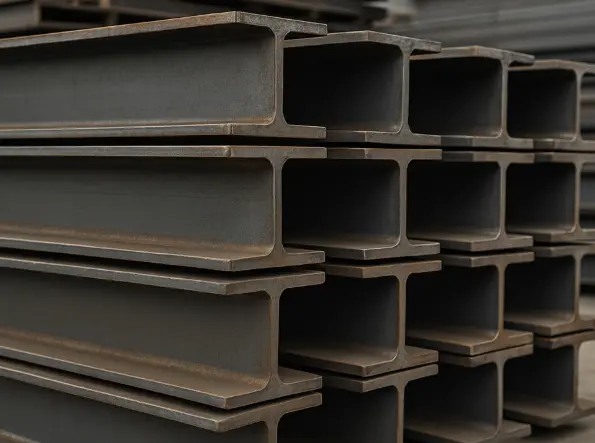
UC Beam Dimensions and Designation
UC beams are typically designated by their depth, flange width, and weight per meter. For example:
- 203 × 203 × 46 UC
- 203 mm depth
- 203 mm flange width
- 46 kg per meter
This standardized naming convention allows engineers and contractors to quickly identify the structural properties of the section.
Main Applications of UC Beams
UC beams are primarily used in vertical structural elements, but their versatility allows for multiple applications:
1. Structural Columns
UC beams are most commonly used as columns in:
- Multi-story buildings
- Industrial facilities
- Warehouses
2. Load-Bearing Frames
They form part of steel frame structures, supporting floors, roofs, and other loads.
3. Infrastructure Projects
Used in:
- Bridges
- Platforms
- Heavy-duty support structures
4. Retrofitting and Reinforcement
UC sections are often added to existing buildings to enhance load capacity.
UC Beam vs UB Beam: Key Differences
A common confusion in construction is between UC (Universal Column) and UB (Universal Beam) sections.
| Feature | UC Beam (Universal Column) | UB Beam (Universal Beam) |
|---|---|---|
| Primary Use | Vertical (columns) | Horizontal (beams) |
| Shape | Nearly square profile | Rectangular profile |
| Flange Width | Wide and equal | Narrower than depth |
| Load Type | Axial load | Bending load |
In simple terms, UC beams resist compression, while UB beams resist bending.
Advantages of UC Beams
1. High Load Capacity
UC beams are designed to handle heavy vertical loads, making them ideal for structural columns.
2. Structural Stability
Their symmetrical H-shape ensures excellent resistance to buckling.
3. Versatility
Suitable for both building construction and infrastructure projects.
4. Ease of Fabrication
UC sections are easy to:
- Cut
- Weld
- Bolt
This simplifies on-site installation and reduces labor costs.
5. Standardization
Globally recognized sizes ensure compatibility across projects and regions.
Materials and Manufacturing
UC beams are typically made from high-strength structural steel, such as:
- S275
- S355
They are produced through hot rolling, which enhances mechanical properties like:
- Yield strength
- Toughness
- Durability
Why UC Beams Are Essential in Modern Construction
With the rise of steel-frame construction, UC beams have become indispensable. Their ability to support vertical loads efficiently makes them a cornerstone of:
- High-rise buildings
- Industrial plants
- Commercial structures
Additionally, their cost-efficiency and recyclability align with sustainable construction practices.
Conclusion
A UC beam (Universal Column) is a critical structural steel component designed primarily for vertical load-bearing applications. With its robust design, high strength, and versatility, it plays a vital role in modern construction and infrastructure.
Understanding the difference between UC beams and other steel sections ensures proper material selection, ultimately improving structural safety and performance.
Post time: Apr-10-2026